The Definitive Guide to Solar Powered Smart Fencing: Resilience and Autonomy
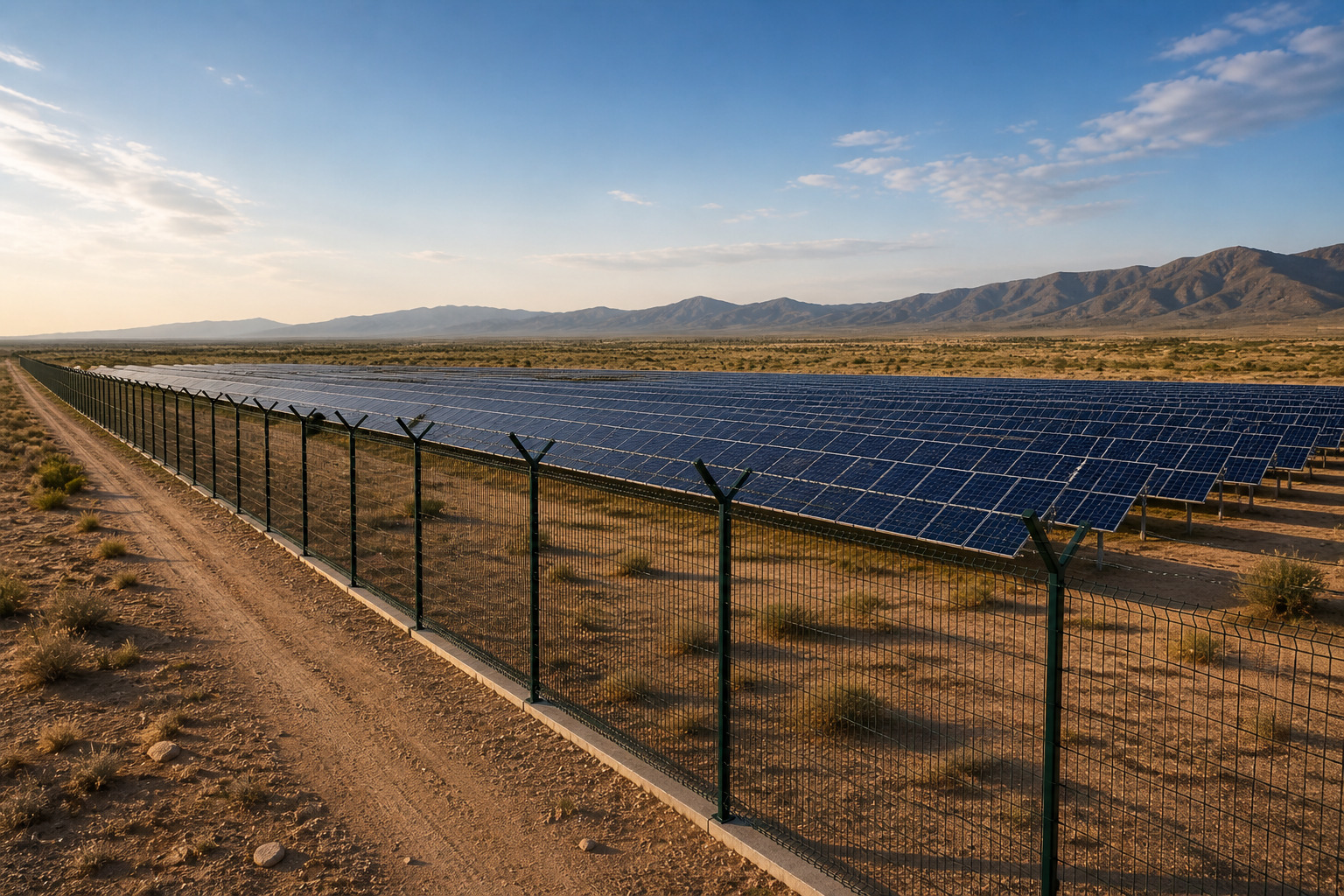
Solar Powered Smart Fencing the convergence of renewable energy harvesting and edge-based security hardware has fundamentally altered the management of remote perimeters. In environments where traditional electrical infrastructure is either cost-prohibitive or physically impossible to deploy, the deployment of independent, energy-autonomous detection systems has become a critical necessity. The challenge lies in balancing the inherent energy limitations of photovoltaic collection with the demanding power requirements of modern telemetry, high-definition optical sensors, and active deterrents.
This transition from passive barriers to intelligent, self-sustaining assets represents a departure from the “set-and-forget” mentality that historically plagued remote installations. True efficacy in this domain demands a rigorous understanding of battery chemistry, charge-controller efficiency, and network latency. An oversight in any single component—such as miscalculating the solar irradiance during winter solstice or failing to account for the standby current of a wireless radio—can render a multi-thousand-dollar installation entirely ineffective.
Effective perimeter design requires an analytical approach that treats the fence line as a distributed computing network. Every node, from the solar panel array to the individual sensor, functions as a link in a chain of reliability. As we examine the complexities of these systems, we move away from marketing-driven promises of absolute security and toward an engineering-focused perspective on resilience, maintenance, and the strategic deployment of limited, renewable resources.
Understanding Solar Powered Smart Fencing
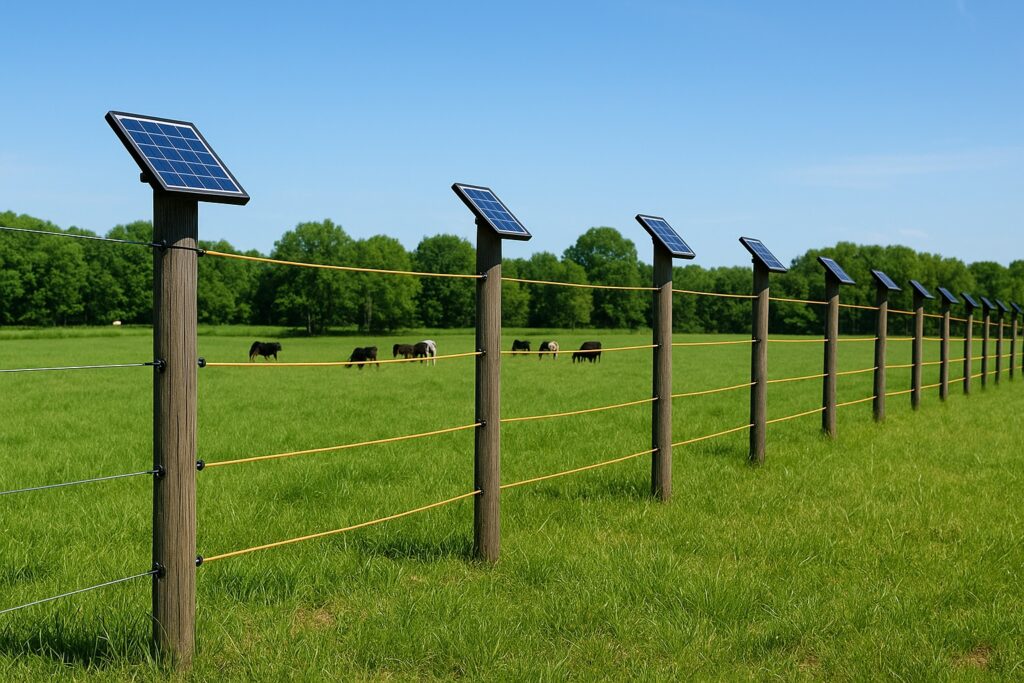
At its most fundamental level, Solar Powered Smart Fencing describes an integrated system that combines physical deterrence with localized energy harvesting and intelligent sensing. The primary risk in this field is the tendency to equate “solar-powered” with “wireless and maintenance-free.” In reality, the integration of smart electronics into a fence line introduces a significant maintenance profile, particularly concerning the longevity of energy storage systems and the physical integrity of solar arrays exposed to harsh outdoor elements.
Misunderstandings often arise from the assumption that these systems operate in isolation. However, a smart fence that cannot communicate its status, alert of a breach, or self-report battery health is effectively a “dumb” barrier with expensive attachments. The intelligence layer—the “smart” component—must reconcile high-performance monitoring with the aggressive power-management techniques required to operate within the limits of a photovoltaic budget.
Oversimplification occurs when proponents ignore the geographical variability of solar potential. Professional design requires a granular audit of every load—from the cellular backhaul radio to the passive infrared sensor—to ensure the system maintains an equilibrium between daily energy intake and total energy consumption.
Systemic Evolution: From Mechanical Barriers to Autonomous Nodes
Solar Powered Smart Fencing the trajectory of perimeter security began with the simple, static barrier—the wall, the chain-link, or the wire. Over time, these structures were electrified to provide active deterrence. The modern era of the autonomous node began when advances in lithium-iron-phosphate (LiFePO4) storage and highly efficient microcontrollers allowed for the decentralization of security. We have moved from centralized, grid-reliant systems to decentralized arrays that function independently, utilizing mesh networks to relay information. This shift has allowed for the securing of expansive, non-contiguous perimeters that were previously considered “dead zones.”
Conceptual Frameworks for Autonomous Perimeter Security Solar Powered Smart Fencing
1. The Energy-Security Equilibrium This model posits that the reliability of a security system is directly proportional to its energy budget. Any increase in detection sensitivity or communication frequency consumes more energy, which in turn requires larger panels and batteries. Design must optimize for the “minimum viable energy state” that achieves the required detection probability.
2. Distributed Node Logic Rather than treating the fence as a single monolithic entity, we view it as a collection of autonomous nodes. If one node experiences a catastrophic battery failure due to a localized shading event, the rest of the system must remain functional, and the failure itself must be reported by the surrounding nodes.
3. The Latency-Power Trade-off In a remote fence, communication is the most energy-intensive task. By adopting asynchronous reporting cycles—where the fence sends “heartbeat” signals periodically but bursts data only when a breach is confirmed—designers can drastically reduce the average current draw of the communication hardware.
Taxonomy of Smart Fencing Modalities
Decision Logic: Use vibration/strain sensors for large, remote sites where high-resolution imagery is not required and energy conservation is paramount. Employ video analytics only at critical chokepoints or high-value asset storage zones, where the energy cost is justified by the requirement for visual forensic evidence.
Operational Scenarios and Failure Modes Solar Powered Smart Fencing
High-Latitude Seasonal Operation
-
Challenge: Winter months bring prolonged darkness and deep snow cover on panels.
-
Failure Mode: Total system shutdown as batteries reach critical low-voltage protection limits.
-
Resolution: Over-provisioning of solar array surface area and tilt-adjustment mechanics for seasonal optimization, paired with a low-power mode that disables all non-essential telemetry until solar levels rebound.
Remote Arid Corridor
-
Challenge: High wind-blown sand scouring panels and overheating sensitive battery electronics.
-
Failure Mode: Degradation of photovoltaic conversion efficiency leading to a gradual, long-term power deficit.
-
Resolution: Use of tempered glass covers for arrays and the placement of battery storage in sub-surface, thermal-insulated enclosures to stabilize operational temperature.
Economic Dynamics: Total Cost of Ownership
The decision to deploy Solar Powered Smart Fencing must be viewed as a multi-year fiscal commitment. The hardware cost is dwarfed by the long-term expense of battery replacements, which should be modeled on a three-to-five-year cycle regardless of manufacturer longevity claims, given the thermal and electrical stress of outdoor environments.
The Risk Landscape: A Taxonomy of Vulnerability Solar Powered Smart Fencing
-
Environmental Obfuscation: Natural growth (vegetation) shading panels or triggering false vibration alerts.
-
Network Partitioning: Reliance on cellular or satellite backhaul introduces risks of service provider outages, necessitating local edge-storage of security events.
Governance, Maintenance, and Long-Term Adaptation
A structured maintenance cycle is not a suggestion; it is the fundamental requirement for system longevity.
-
Battery State-of-Health (SoH) Audit: Annual checks on voltage sag under load.
-
Structural Integrity Review: Inspecting mounting bolts and conduit seals for stress fractures caused by wind vibration.
Evaluating Efficacy: Measurement and Telemetry Solar Powered Smart Fencing
Success is measured by the system’s “uptime during peak threat periods.” If a system fails during a storm, that is a failure of design, not an act of nature. Leading indicators include the “daily depth of discharge” of batteries. Qualitative signals, such as the persistence of false alarms after a maintenance cycle, indicate a need for a re-evaluation of the detection algorithms.
Common Misconceptions and Oversimplifications
-
Myth: “If the sensors are smart, they won’t trigger false alarms.”
-
Correction: Intelligence is an interpretation of data. In high-interference environments, no algorithm is perfect; all require manual thresholding based on site-specific experience.
-
-
Myth: “Solar panels last 25 years, so the system is maintenance-free.”
-
Correction: The panel may last, but the associated energy storage and electronic controllers are highly susceptible to environmental aging.
-
Synthesis Solar Powered Smart Fencing
The architecture of Solar Powered Smart Fencing represents a precarious balance between the physics of energy collection and the demands of high-reliability security. Practitioners must maintain a healthy skepticism of “turnkey” claims, opting instead for systems that offer deep visibility into telemetry and allow for granular control over every aspect of power consumption. The objective is not to build a system that never fails, but to design a system that fails gracefully, reports its own limitations, and remains a coherent component of a broader security strategy.